There is a traditional Chinese tea called Rougui tea. Interestingly, its Chinese name is exactly the same as that of a familiar spice: cinnamon.
Rougui tea is one of the most representative Wuyi rock teas. Unlike the gentle floral aromas of many other teas, its distinctive aroma is sharp, intense, and penetrating, resembling that of cinnamon bark. This is how it got its name, although the tea contains no added cinnamon.
Its distinctive aroma, rich flavor, and full-bodied texture have attracted many tea enthusiasts.
However, when shopping for Rougui tea, you may notice that prices can vary by tens or even hundreds of times.
So, what is the difference between inexpensive and expensive Rougui tea?
This guide will help you understand these differences and find a good-quality Rougui tea that suits your taste and budget.
Types of Rougui Tea and Their Characteristics
When shopping for Rougui tea, you can understand its differences through four factors: growing region, specific terroir, roasting level, and tree age.
By Growing Region
Rougui tea-growing regions can be divided into two broad categories: those within the traditional Wuyi rock tea-producing area and those outside it.
The traditional Wuyi rock tea-producing area consists of three geographical layers, from the center outward: Zhengyan, Banyan, and Zhoucha.
Zhengyan is the core producing area. Banyan surrounds Zhengyan, while Zhoucha lies further outward, mainly along rivers and relatively flat terrain.
Areas outside the traditional Wuyi rock tea-producing region are known as Waishan.
Growing Region | Growing Environment | Typical Flavor Characteristics |
|---|---|---|
Zhengyan | The traditional core producing area of Wuyi Mountain, characterized by rocky cliffs, ravines, and distinctive microclimates | Full-bodied and delicate tea liquor, complex aromas, and pronounced rock rhyme |
Banyan | Areas surrounding the core producing region, with different growing conditions | Distinct cultivar aroma, but generally less body and depth of aftertaste than high-quality Zhengyan tea |
Zhoucha | Alluvial plains and areas along rivers | More straightforward aromas, lighter body, and less pronounced rock rhyme |
Waishan | Tea gardens outside the traditional Wuyi rock tea-producing area; its exact scope varies in commercial usage | Highly variable flavors that may still feature a distinctive cinnamon bark aroma |
By Specific Terroir
There is a popular saying among Chinese rock tea enthusiasts:
"For Shuixian tea, look at the tree age; for Rougui tea, look at the terroir."
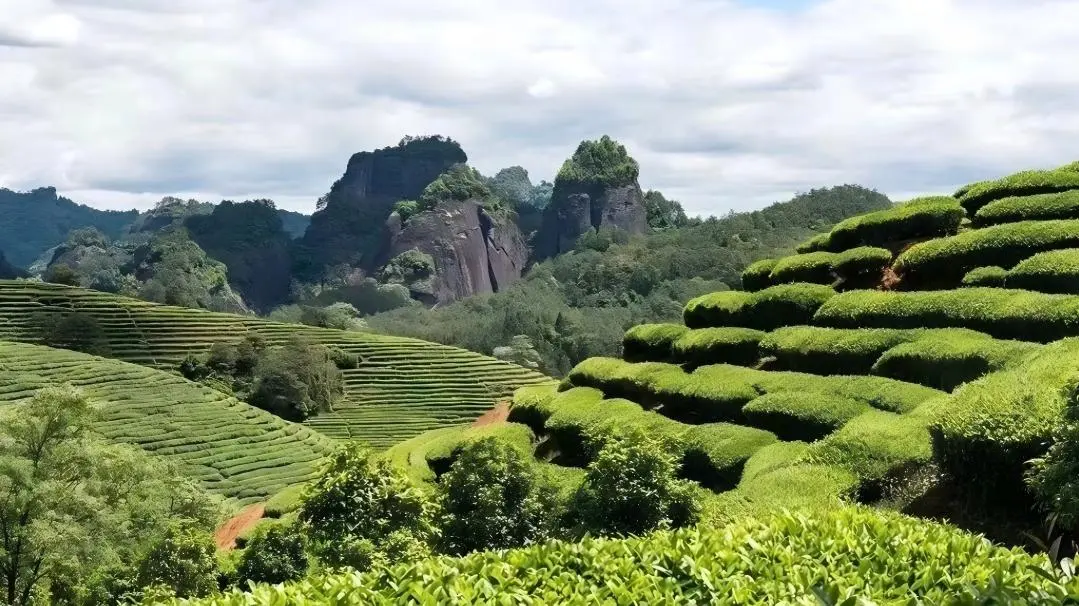
Even within the Zhengyan region, different terroirs vary in sunlight exposure, soil composition, humidity, and surrounding vegetation, all of which influence the aroma and flavor of the finished tea.
Some tea trees grow in deep, narrow ravines with limited sunlight and higher humidity, while others grow on relatively open rocky slopes with greater exposure to sunlight. These environmental differences are an important source of Rougui tea's flavor diversity.
For example, Niulankeng is characterized by a relatively deep and sheltered ravine environment, while Matouyan features more open rocky slopes.
Here are some of the best-known Rougui tea terroirs:
Terroir | Typical Flavor Characteristics |
|---|---|
Niulankeng | Elegant, understated aroma, delicate and silky tea liquor, and a lingering finish |
Matouyan | Bold cinnamon bark aroma, pronounced spicy sharpness, and rich flavor |
Huxiaoyan | Intense aroma and full-bodied flavor |
Zhuke | Relatively understated aroma, with a soft and delicate tea liquor |
Jiulongke | Rich aromas, full-bodied flavor, and pronounced complexity |
By Roasting Level
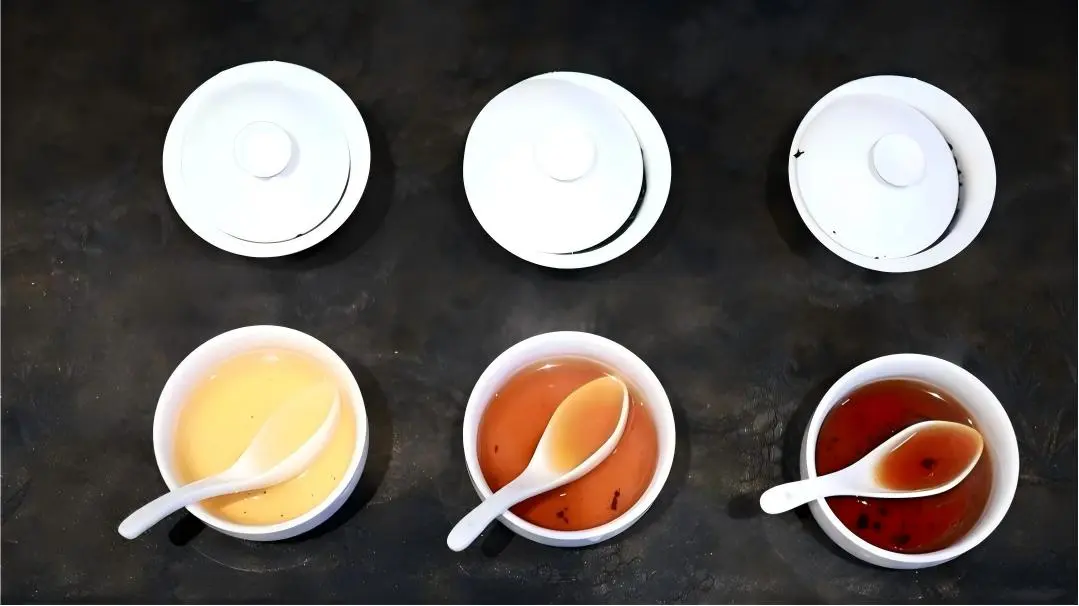
Roasting not only changes the aroma and flavor of Rougui tea but also influences how distinctly its natural cultivar characteristics are expressed.
As roasting becomes heavier, the tea's original floral and cinnamon bark aromas may gradually become less pronounced, while ripe fruit, nutty, and caramel notes develop.
If you want to experience the natural characteristics of the Rougui cultivar, choose a lighter roast. If you prefer richer, more mature flavors, consider a heavier roast.
Roasting Level | Typical Flavor Characteristics |
|---|---|
Light Roast | Pronounced floral and cultivar aromas, with a fresh and lively taste |
Medium-Light Roast | Distinct cinnamon bark aroma accompanied by floral and fruity notes, with subtle roasted aromas |
Medium Roast | A balance between cultivar and roasted aromas, with a relatively full-bodied taste |
Medium-Heavy Roast | Pronounced ripe fruit and caramel notes, with a rich and smooth texture |
Heavy Roast | Prominent nutty and caramel notes, with a deep, mellow flavor |
If you are buying Rougui tea for the first time, medium roast is a good starting point. If you are particularly drawn to its distinctive cinnamon bark aroma, consider starting with a medium-light roast.
By Tree Age
You may also encounter more expensive products labeled as Old Tree Rougui Tea. These are generally made from leaves harvested from Rougui tea trees that have been growing for several decades.
Type | Typical Flavor Characteristics |
|---|---|
Regular Rougui Tea | Pronounced cinnamon bark aroma and distinctive cultivar characteristics |
Old Tree Rougui Tea | Potentially milder cinnamon bark aroma, understated fragrance, woody notes, and a softer texture |
Unlike Shuixian tea, tree age is not the most important factor when choosing Rougui tea.
Old Tree Rougui Tea may actually have a less pronounced cinnamon bark aroma than regular Rougui tea, although its distinctive woody notes also appeal to many tea enthusiasts.
Neither is necessarily superior. The choice depends on your personal taste.
Key Factors That Influence Rougui Tea Prices
Many factors influence the price of Rougui tea, including raw material quality, harvesting time, processing techniques, and brand premiums.
However, tea is ultimately meant to be enjoyed. From a drinking perspective, two of the most important factors determining its value are:
How pronounced and long-lasting its cinnamon bark aroma is.
How distinctive its rock rhyme (Yan Yun) is.
So, what causes differences in the aroma and flavor of Rougui tea?
The answer lies largely in its terroir.
Rougui tea trees are primarily propagated through asexual methods, such as cuttings and layering, which preserve relatively stable genetic characteristics. Therefore, when harvesting standards and processing techniques are similar, terroir becomes an important factor influencing flavor differences.
The terrain of Wuyi Mountain is extremely complex. Even two nearby terroirs may differ significantly in soil composition, sunlight exposure, humidity, and microclimate.
These natural conditions influence the accumulation of aromatic and flavor compounds within the tea leaves, ultimately affecting the aroma, taste, and rock rhyme of the finished tea.
This is why Chinese rock tea enthusiasts often say, "For Shuixian tea, look at the tree age; for Rougui tea, look at the terroir."
What Is Rock Rhyme (Yan Yun)?
Rock rhyme, or Yan Yun, is a distinctive quality characteristic of Wuyi rock tea. It develops through the combined influence of the tea cultivar, growing environment, and processing techniques.
It represents the combined expression of aroma and flavor and is described in China's national standards as Yan Gu Hua Xiang, literally meaning "rock bones and floral fragrance."
Rock rhyme is not a specific aroma or taste, but an overall sensory experience. Chinese rock tea enthusiasts often use four words to describe the characteristics of high-quality rock tea:
Characteristic | Meaning |
|---|---|
Fragrance (Xiang) | Pure, rich, and long-lasting aromas that naturally integrate with the tea liquor |
Clarity (Qing) | Clean aromas and flavors without noticeable off-notes |
Sweetness (Gan) | A mellow, sweet taste, followed by noticeable returning sweetness and salivation |
Vitality (Huo) | A lively tea liquor with layered and evolving aromas and flavors |
Take Niulankeng and Matouyan Rougui tea as examples.
Niulankeng Rougui tea may not have as intense a cinnamon bark aroma as Matouyan Rougui tea. However, high-quality Niulankeng Rougui tea often excels in delicacy, vitality, and rock rhyme, which is one reason why it is highly sought after by rock tea enthusiasts.
For beginners, the most straightforward way to understand rock rhyme is through comparative tasting.
Choose Rougui teas from different growing regions with similar roasting levels. Brew them under identical conditions and pay attention to differences in mouthfeel, the harmony between aroma and flavor, and the lingering sensations after swallowing.
How to Choose Rougui Tea Before Buying
Before tasting a tea, we can use information on its packaging and product description to assess its origin, classification, and stated quality.
Product Standards
Rougui is a tea cultivar that is not exclusively grown in Wuyi Mountain. It is also cultivated in Anxi and Jian'ou in Fujian Province, as well as in Guangdong and Jiangxi.
So, how can you distinguish Wuyi rock tea Rougui from Rougui tea produced elsewhere?
There are two common Chinese national product standards for Rougui tea:
Product Standard | Origin Requirements |
|---|---|
GB/T 18745-2006 | Production is restricted to the administrative area of Wuyishan City and must comply with relevant production and processing requirements |
GB/T 30357.5-2015 | Requires the use of the Rougui tea cultivar but does not restrict production to Wuyi Mountain |
For Rougui tea produced under these standards, the main difference is their geographical restrictions.
If you want to experience authentic Wuyi Rougui tea, prioritize products labeled with GB/T 18745, together with geographical indication and traceability information.
Note that GB/T 18745-2026 has already been published and will officially replace the 2006 version on April 1, 2027.
In addition to product standards, the following three identifiers can help you verify the origin and authenticity of Rougui tea.
Geographical Indications and Traceability
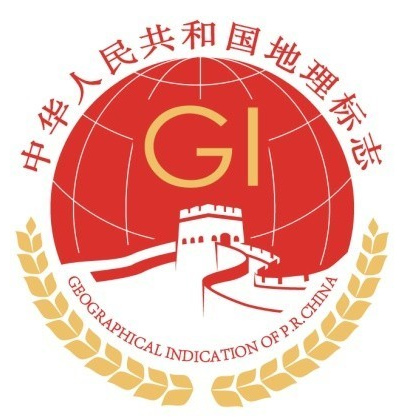
China's Official Geographical Indication Mark (GI)
GI stands for Geographical Indication.
Wuyi rock tea products legally authorized to carry this mark must meet specified requirements regarding geographical origin, raw materials, processing techniques, and product quality. Producers and businesses must also obtain authorization to use the mark.
It is an important indicator of authentic Wuyi rock tea origin. However, it does not prove that the tea comes from Zhengyan or a specific terroir such as Niulankeng or Matouyan, nor does it indicate a higher quality grade.
Traceability QR Code
Unlike the previous two marks, traceability QR codes are primarily used to retrieve information about individual products or production batches.
Depending on the traceability system, consumers may be able to access:
Manufacturer and production batch information.
Origin of the raw materials, specific tea gardens, or terroirs.
Harvesting and production dates.
Processing techniques and roasting records.
Quality inspection and authenticity verification information.
When scanning a QR code, check whether the verification platform is trustworthy and whether the displayed information matches the packaging.
If the QR code only redirects you to a promotional page without providing actual product information, it offers little traceability value.
If a seller charges a premium for Rougui tea from a prestigious terroir such as Niulankeng or Matouyan, traceability information about the specific tea garden becomes particularly important.
Quality Grades
According to GB/T 18745-2006, Wuyi Rougui tea is classified into three quality grades:
Grade | Aroma Characteristics | Flavor Characteristics |
|---|---|---|
Special Grade | Rich and long-lasting aromas, potentially featuring cinnamon bark, milky, or peach notes | Full-bodied and fresh, with pronounced rock rhyme |
Grade 1 | Refined and lingering aroma | Full-bodied, with relatively distinct rock rhyme |
Grade 2 | Clean, pleasant aroma | Mellow and harmonious, with subtle rock rhyme |
Zhengyan and Banyan are geographical classifications, while Special Grade, Grade 1, and Grade 2 are quality classifications.
Marketing terms such as "Master Grade," "Collector's Grade," and "Premium Grade" are not official quality grades defined by this national standard.
Harvest Year and Roasting
In addition to quality grades, personal taste preferences are equally important. Since roasting significantly influences flavor, the following information is worth checking before buying:
Information | Why It Matters |
|---|---|
Harvest Year | The production year printed on the packaging is not necessarily the year the leaves were harvested |
Roasting Level | Helps determine whether the aroma and flavor suit your preferences |
Most Recent Roasting Date | Helps assess whether the tea is ready to drink |
Freshly roasted Rougui tea may have pronounced roasted notes, while its aromas and flavors have not yet fully harmonized.
It usually needs to rest for a period after roasting. In Chinese tea culture, this process is known as Tui Huo, or resting after roasting.
The required resting period varies depending on the roasting level. Before purchasing, ask the seller when the tea was last roasted and whether it is currently ready to drink.
How to Judge Rougui Tea Quality Through Tasting
Regardless of how prestigious the terroir is or how expensive the tea may be, its actual quality must ultimately be judged through tasting.
Based on how well the aroma integrates with the tea liquor, Chinese rock tea enthusiasts have developed a tasting framework consisting of five levels:
Level | Name | Tasting Experience |
|---|---|---|
1 | Floating Aroma (Shui Piao Xiang) | The tea smells fragrant, but little aroma is perceived when drinking. The fragrance seems to float above the tea liquor. |
2 | Aroma Enters the Liquor (Xiang Ru Shui) | The tea smells and tastes fragrant, but the aroma quickly disappears after swallowing. |
3 | Aroma Within the Liquor (Shui Han Xiang) | The aroma is integrated into the tea liquor and lingers pleasantly in the mouth after swallowing. |
4 | Aroma Emerges from the Liquor (Shui Sheng Xiang) | The aroma is elegant and understated. The tea tastes more fragrant than it smells, releasing layers of aroma as you drink. |
5 | Liquor and Aroma Become One (Shui Ji Xiang) | The aroma and tea liquor are fully integrated, filling the mouth and throat with fragrance and leaving a long-lasting finish. |
These five levels are an experience-based tasting framework rather than official quality grades.
Generally, the more naturally and persistently the aroma integrates with the tea liquor, the better its aromatic quality.
Try using this framework to see which level your Rougui tea falls into.
Common Pitfalls When Buying Rougui Tea
The wide price differences and complex terroir culture surrounding Rougui tea create opportunities for misleading marketing and fraudulent practices.
Here are some common pitfalls to watch out for.
Cultivar Substitution
Some sellers may substitute highly aromatic cultivars such as Huang Guanyin (105), Ruixiang (305), Dangui (304), and Jin Mudan for Rougui, or blend them with Rougui and sell the finished tea as pure Rougui tea.
After roasting, these cultivars may develop aromas resembling those of Rougui tea, creating opportunities for dishonest sellers.
Be particularly cautious about the widespread marketing of peach-scented Rougui tea.
Although Rougui tea can naturally develop peach aromas, this characteristic is relatively uncommon, while certain other cultivars produce similar fruity aromas more readily.
If peach aroma is what you are looking for, Rougui tea may not be your best choice.
False Terroir Claims
Selling Zhoucha, Banyan, or Waishan tea as Zhengyan Rougui tea is a form of origin misrepresentation worth watching out for.
Prestigious terroirs such as Niulankeng and Matouyan have relatively high raw material costs and limited production.
If a Rougui tea supposedly comes from a prestigious terroir but is priced far below normal market levels, its claimed origin deserves scrutiny.
Using Heavy Roasting to Conceal Quality Defects
Some sellers use excessive roasting to conceal defects in raw materials or earlier processing stages, presenting obvious burnt flavors as characteristics of heavily roasted Rougui tea.
High-quality heavily roasted Rougui tea can develop mature aromas such as caramel and nuts. However, it should not be dominated by harsh burnt flavors or persistent bitterness and astringency.
Heavy roasting is not the same as excessive roasting.
Artificial Flavorings and Added Sugar
Some low-quality Rougui tea may contain added flavorings or sugar to enhance its aroma and sweetness.
Potential warning signs include unusually intense aromas, a disconnect between aroma and tea liquor, unnatural sweetness, and aromas that disappear rapidly after a few infusions.
These characteristics may indicate quality issues, although tasting alone cannot confirm whether artificial ingredients have been added.
Old Tree Rougui Tea and Marketing Premiums
Unlike Shuixian tea, tree age is not a primary factor determining the quality of Rougui tea.
Old Tree Rougui Tea may have a milder cinnamon bark aroma, with more understated fragrances and woody notes that appeal to certain personal preferences.
Therefore, marketing claims such as "Master-Made" or "Century-Old Tea Trees" do not, by themselves, justify a higher price.
Final Thoughts: Starting with the Right Rougui Tea
By now, you should have a general idea of how to choose Rougui tea.
If you're still unsure where to start, MistoryTea recommends a moderately priced, medium-roast Rougui tea. This allows you to experience its distinctive cultivar aroma and full-bodied flavor without paying a high terroir premium.
As you gain more tasting experience, explore different terroirs and roasting levels to discover what truly suits your taste.