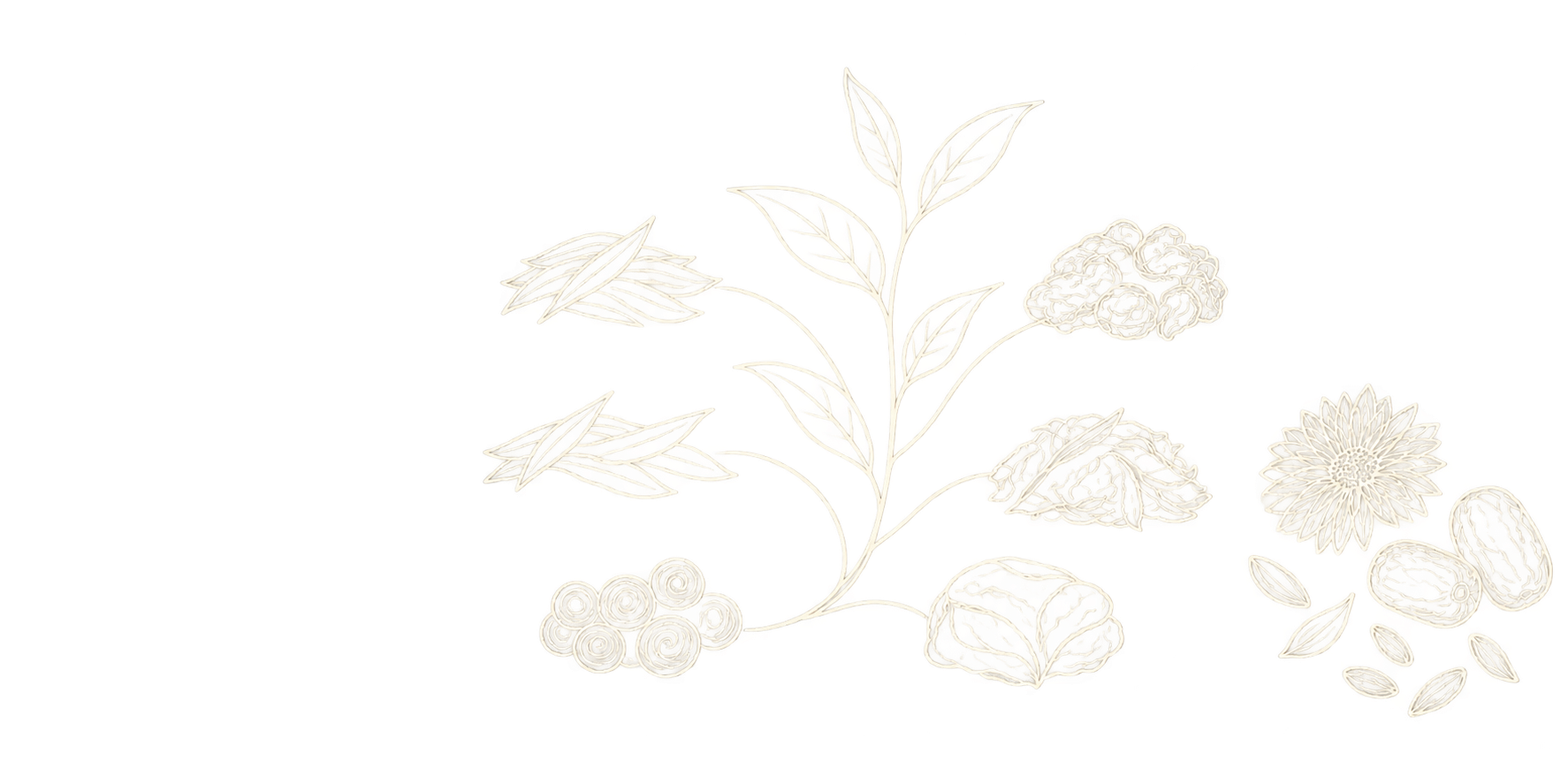
Diverse Ingredients
Herbal teas may use processed flowers, fruits, seeds, leaves, and roots, rather than the leaves of Camellia sinensis.
Choose Tea
Compare China’s traditional tea types, then discover the possibilities of herbal infusions.
One plant, six processes
All six begin with leaves from the one plant "Camellia sinensis". Processing shapes the type, while individual teas still vary by cultivar, origin, harvest, and brewing.
| Tea type | Core process | Oxidation | Caffeine | Beginner | Aging potential |
|---|---|---|---|---|---|
| Green tea | Fixing | Minimal oxidation | No | ||
| White tea | Withering | Light natural oxidation | Yes | ||
| Yellow tea | Menhuang yellowing | Low; mainly non-enzymatic | No | ||
| Oolong tea | Bruising | Partial oxidation | Some styles | ||
| Black tea | Full oxidation | Highly oxidized | No | ||
| Dark tea | Microbial post-fermentation | Post-fermented | Yes |
Beyond the tea leaf
Herbal teas may use processed flowers, fruits, seeds, leaves, and roots, rather than the leaves of Camellia sinensis.
Green, white, yellow, oolong, black, and dark tea all come from Camellia sinensis. Different processing methods create the six traditional types. In contrast, herbal teas feature a diverse range of ingredients and are classified based on their composition.
In traditional Chinese medicine, herbal teas reflect the idea that food and medicine share the same origin. Ingredients are chosen as part of everyday yangsheng—supporting balance, seasonal care, and daily wellbeing.
Thoughtful combinations of flowers, fruits, seeds, and roots make it easier to choose a complete blend without starting ingredient by ingredient.
Herbal Tea offered for general wellness only. It does not constitute medical advice, diagnosis, or treatment.
Find your starting point