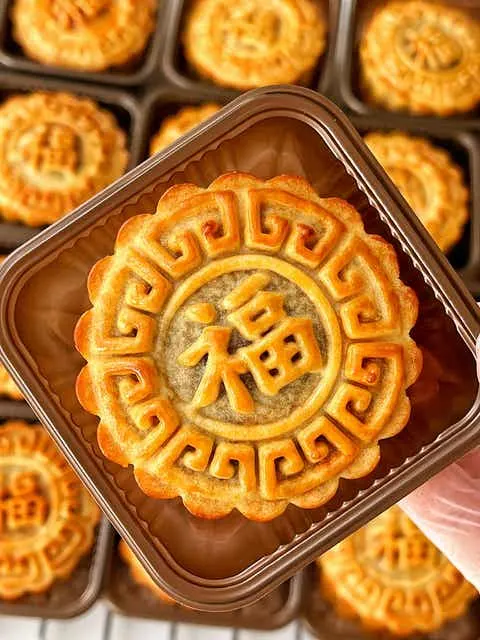
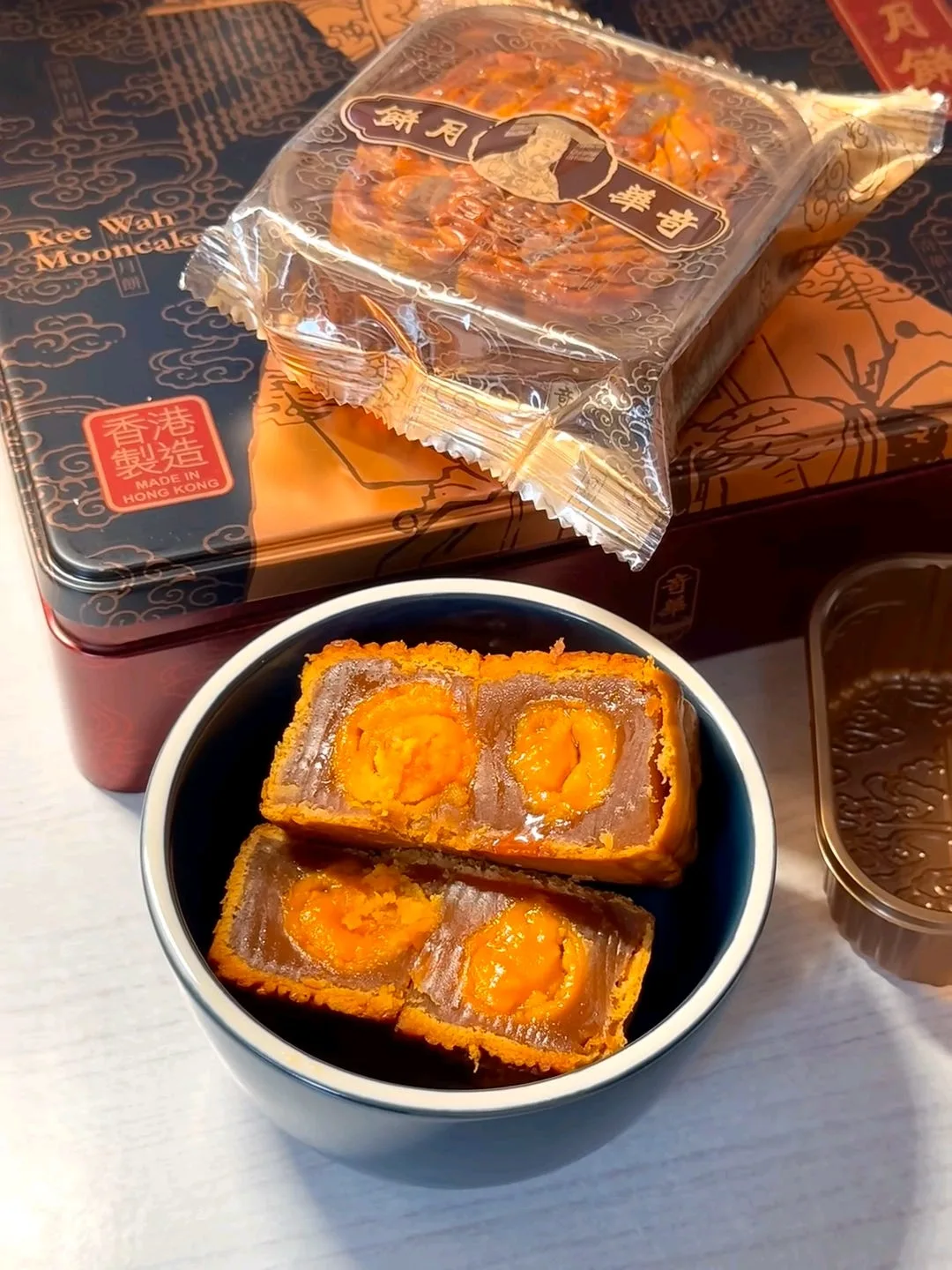
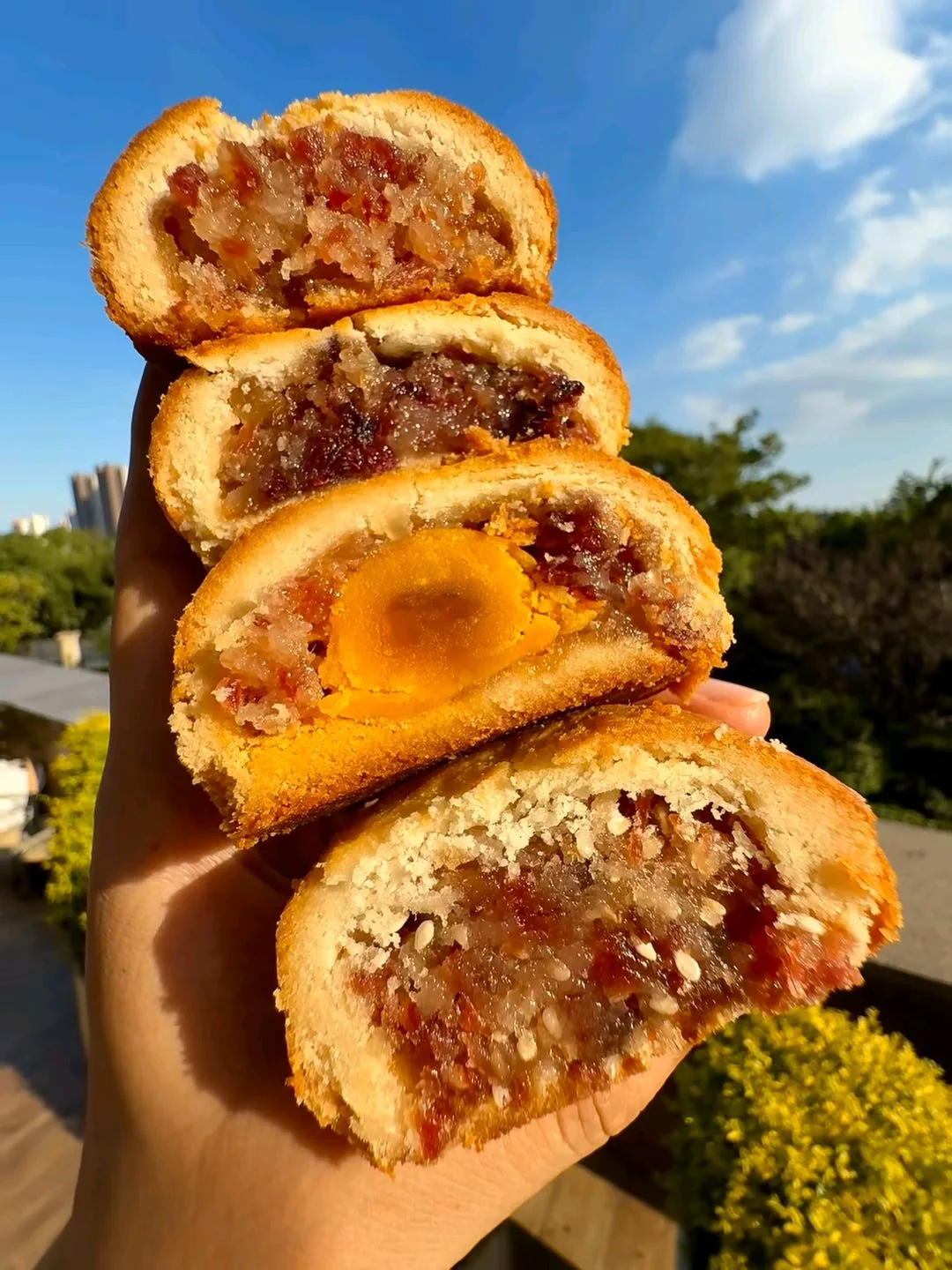
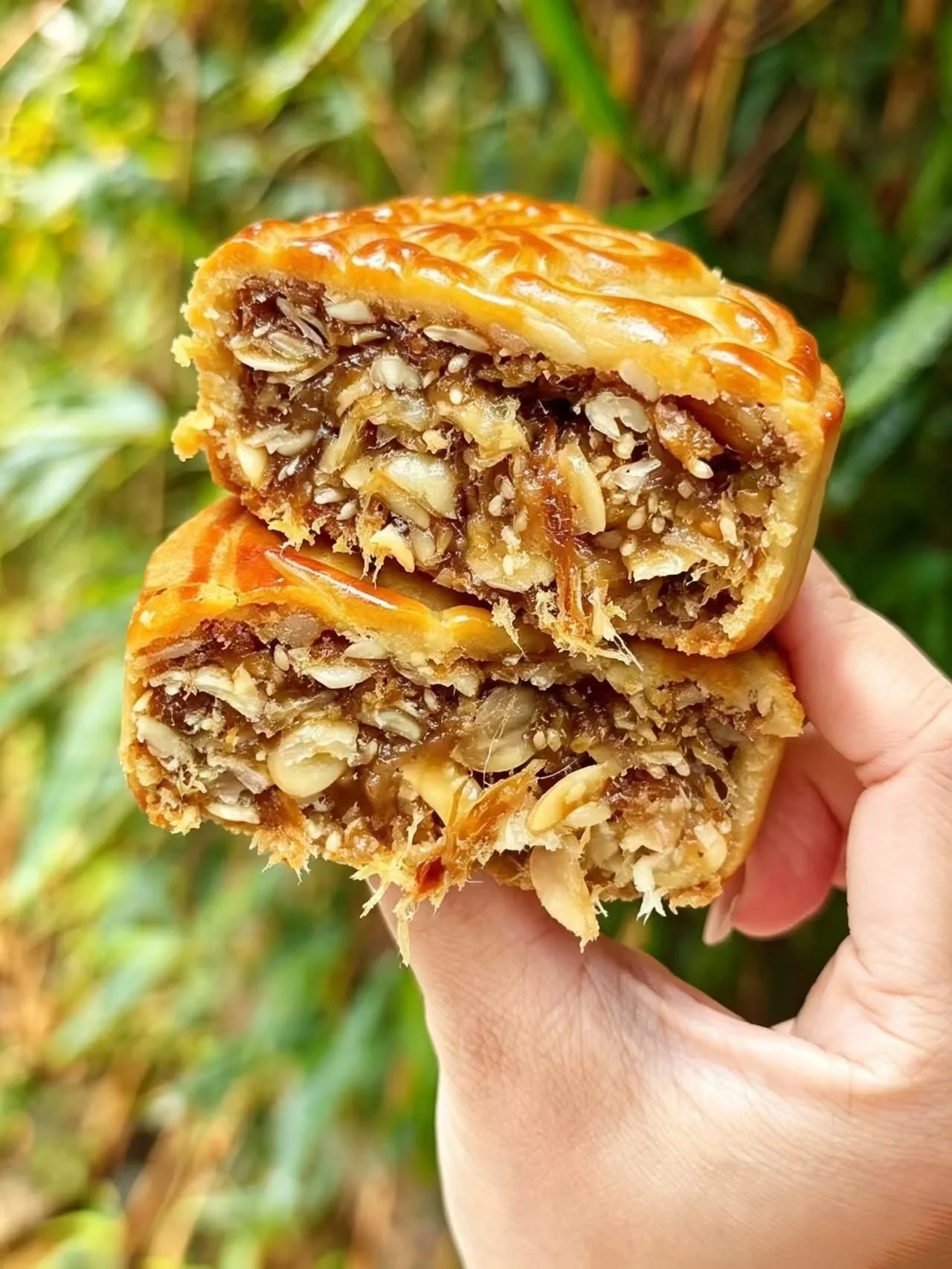
If you ask a Chinese person what the moon tastes like, they will tell you it tastes like lotus seed paste with salted egg yolk, five kernels, or red bean paste...
Chinese people have a remarkably rich culinary imagination. Based on what the moon looks like at its fullest, they created a kind of cake called the “mooncake” (Yuebing).
During the Mid-Autumn Festival, Chinese families love to gather together. Reluctant to leave the table after dinner, they fill it with various fruits and pastries, chatting while admiring the moon. The most classic pastry among these is the mooncake.
Why do Chinese people associate mooncakes with the moon?
In Chinese culture, a circle often represents reunion and togetherness. According to the Chinese lunar calendar, the Mid-Autumn Festival falls on the 15th day of the 8th month. At this time, the moon is usually at its fullest—a rare occurrence that happens only once a year. Family reunions are just as rare and precious as this annual full moon night, so the “full moon” gradually became one of the most important symbols of reunion.
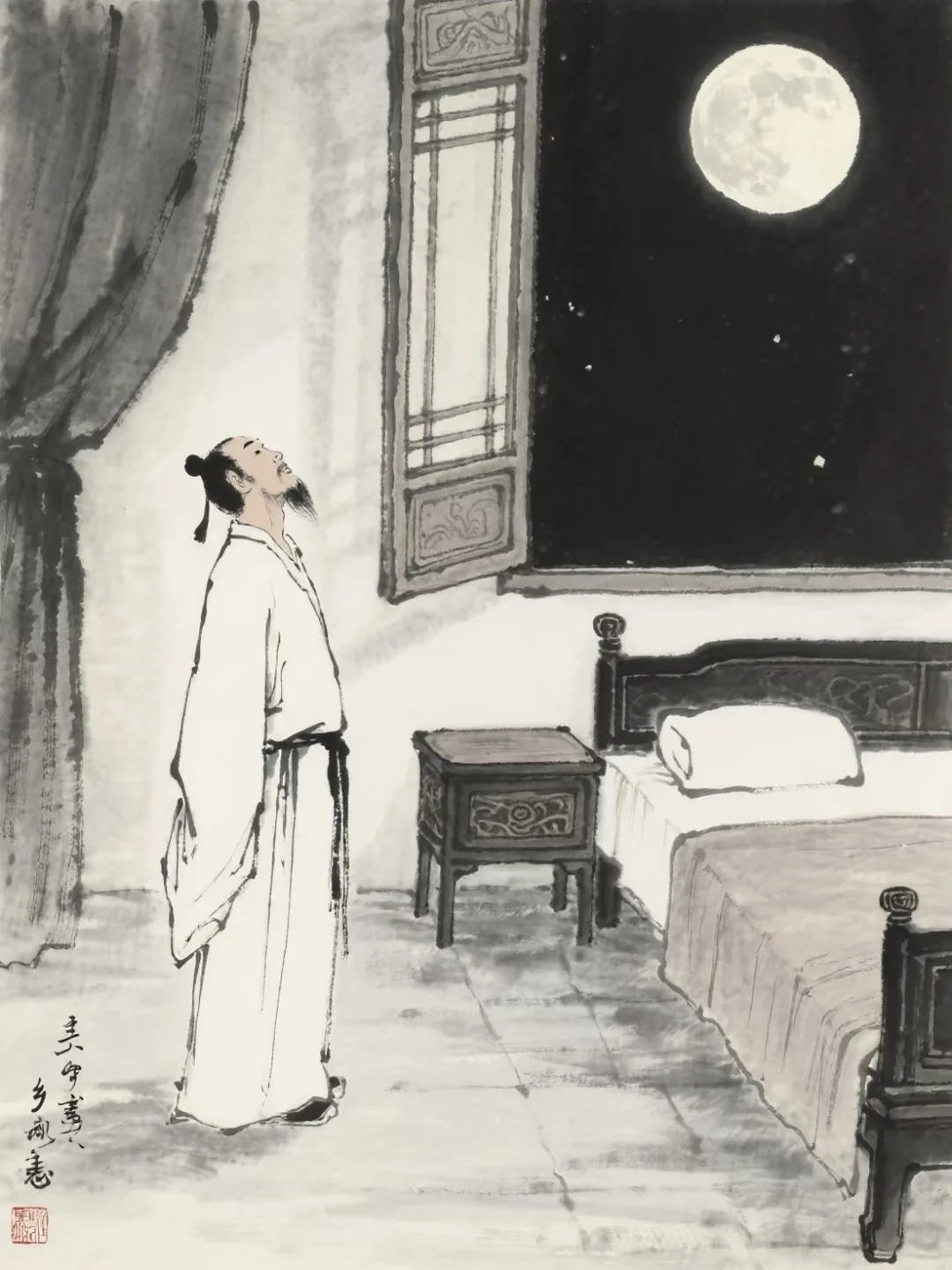
The famous poet Li Bai wrote a line of poetry that even a 6-year-old Chinese child can recite:
Looking up, I gaze at the bright moon. looking down, I think of my hometown.
No matter where you are, you can see the moon just by looking up. Knowing that you and your family are looking at the exact same moon brings a sense of closeness to your heart.
The full moon is exceptionally beautiful, looking perfectly round. Therefore, Chinese people pin their longing for their families and their nostalgia for their hometowns on the moon of the Mid-Autumn night.
The moon can be seen but not touched. Thus, clever Chinese people invented the mooncake based on the moon’s image. On every Mid-Autumn night, families linger at the dinner table after their meal, admiring the moon while eating mooncakes, because this represents the family staying together forever
However, not everyone is lucky enough to reunite with their family during the Mid-Autumn Festival. Therefore, Chinese people gift mooncakes to one another as a blessing, wishing you and your family a peaceful, fulfilling reunion. Looking at the same moon and eating mooncakes during the festival makes you feel exceptionally close to your family, even if you are thousands of miles apart.
The Mooncake Is Not Really a “Cake”
Although literally translated as a cake of the moon, its ingredients are completely different from the Western definition of a cake. Traditional mooncakes are usually only the size of a palm, with a very thin crust stuffed with a thick filling. When held in your hand, it feels much heavier than it looks.
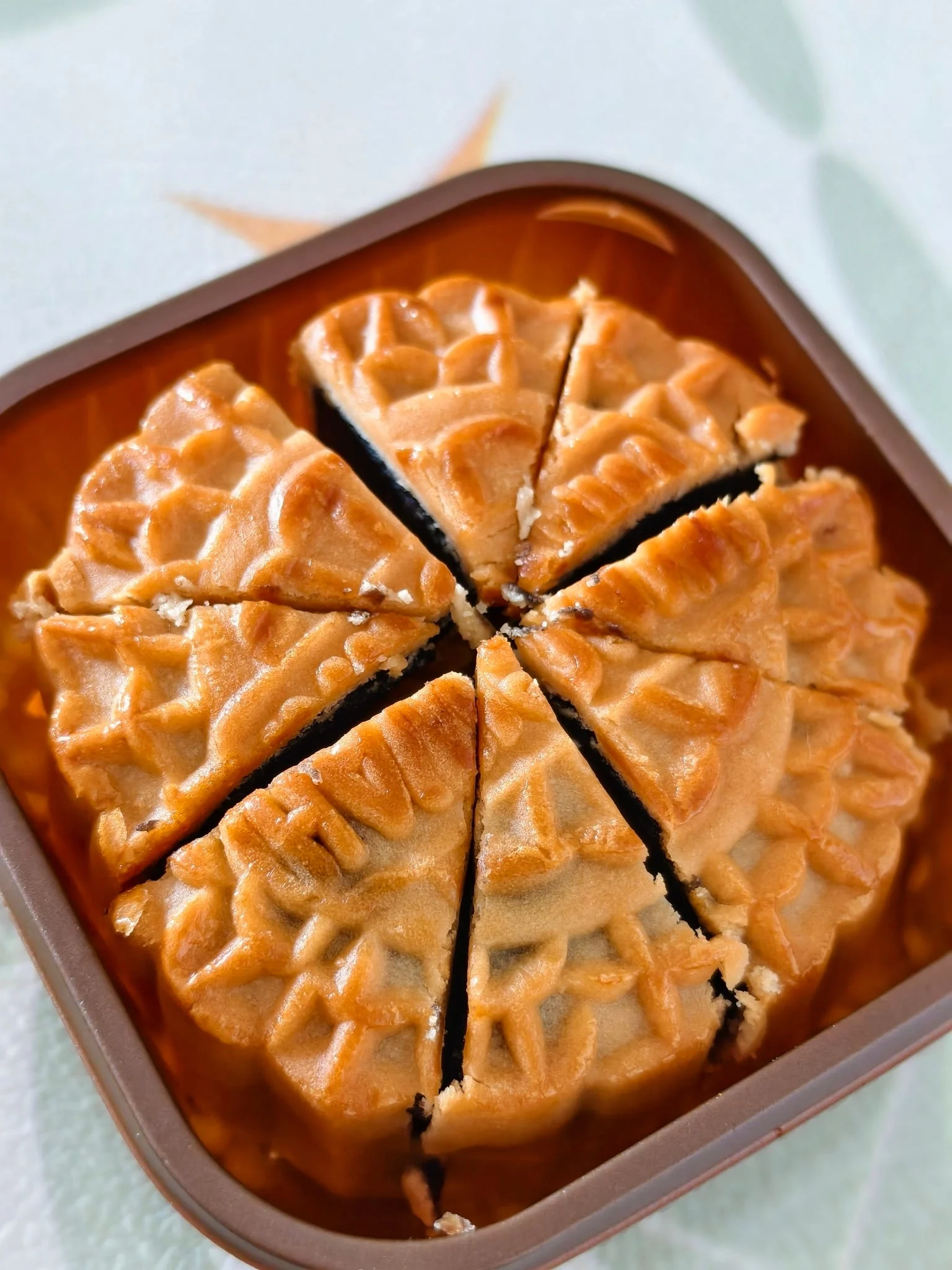
Moreover, what’s inside a mooncake might surprise first-time eaters. It can be sweet lotus seed paste or red bean paste wrapping a whole salted egg yolk in the middle; some contain walnuts, sesame seeds, and various nuts, while others might even contain ham or fresh minced meat.
So, even though the word “mooncake” has “cake” in its name, it tastes more like a highly condensed, richly stuffed festive pastry. Because the flavor is usually quite rich, a single mooncake is rarely meant to be finished by one person alone. A family will slice it into four, six, or even eight pieces, with everyone taking a small wedge to share together.
Classic Tea Pairings for Different Mooncakes
There are three classic traditional mooncake flavors: Cantonese-style sweet mooncakes, savory meat/ham mooncakes, and nut-based mooncakes.
Cantonese-Style Sweet Mooncakes
The fillings of these mooncakes are mainly lotus seed paste (made from boiled white or red lotus seeds), red bean paste (made from stir-fried adzuki beans), or various fruit purees (like cantaloupe or pineapple), complemented by white sugar and vegetable oil. The texture is incredibly delicate and smooth, melting in the mouth. It tastes sweet and soft with a rich, caramelized syrup and rich aroma, but it can easily become overly sweet.
Pairing: Green tea (like Longjing or Biluochun) or light-fragrance Oolong tea (like Tieguanyin). Green tea and light Oolong are rich in tea polyphenols, which effectively help metabolize sugar. The refreshing tea liquor quickly washes away the cloying sweetness in your mouth, making the mooncake taste even fresher.
Savory Meat/Ham Mooncakes
The filling here is actual meat, made from pork foreleg seasoned with soy sauce, scallion, and ginger juice, or diced Xuanwei ham mixed with honey, white sugar, and cooked flour. The fresh meat version has a flaky, crispy crust, while the filling is juicy, savory, bouncy, and gets more flavorful as you chew.
Pairing: Ripe Pu'er tea and black tea. Being fully fermented or post-fermented teas, they are mild in nature and excellent at cutting through grease and aiding digestion. The mellowness of black tea or the aged aroma of Pu'er blends perfectly with the savory flavor of the meat, cutting the richness while warming the stomach.
Nut-Based Mooncakes (Five Kernels)
These mooncakes are made by kneading a variety of nuts—such as walnuts, almonds, olive kernels, melon seeds, and sesame seeds—with glutinous rice flour, sugar, and lard or vegetable oil. The texture is firm and hearty. When chewing, you can clearly feel the crunchiness of the various nuts; it is dry, fragrant, substantial, and fills your mouth with aroma.
Pairing: Jasmine tea or heavily roasted Oolong tea (like Da Hong Pao or Dancong). Jasmine tea brings its own floral scent, which neutralizes the heaviness of the nuts and provides a refreshing experience. Meanwhile, the mineral notes or caramel aroma of roasted Oolong tea complements the roasted scent of the nuts perfectly, becoming more fragrant with every bite.
As times evolve, mooncake flavors have become incredibly diverse, going far beyond the three types mentioned above. However, Chinese people’s feelings toward family reunions and their nostalgia for their hometowns have remained unchanged for thousands of years.
To the Chinese, the flavor of the mooncake is secondary, what matters most is who you are sitting with and who you are sharing the mooncake in your hand with.
Thank you very much for reading all the way to the end.
If you found this article helpful, please subscribe Mistorytea, and share it with someone who might enjoy it. Your support means a lot to us.
See you in the next article.
Thanks for reading this article from MistoryTea. If this article helped, share it with someone who would enjoy the next cup.
The MistoryTea Letter
More tea stories, thoughtfully told by MistoryTea.