
Shou Mei is a type of white tea. Thanks to the minimal processing used for white tea, much of the leaf's natural flavor is preserved. Fresh Shou Mei typically has refreshing herbal notes and delicate floral aromas, while well-stored aged Shou Mei may gradually develop hints of honey, red dates, and wood.
Its wide range of flavors and unique aging potential have attracted more and more tea enthusiasts. Yet when you are ready to buy Shou Mei for the first time, the sheer variety of products on the market can be confusing.
What Types of Shou Mei Are There?
Shou Mei can be categorized by harvest season, age, and physical form. Each has its own aroma, flavor, and drinking experience. Understanding these differences can help you find a Shou Mei that suits you.
1. By Harvest Season
Shou Mei is mainly harvested in spring and autumn, which are also the two most common types on the market. Summer and winter harvests are relatively rare.
| Type | Flavor Profile | Who It's For |
|---|---|---|
| Spring Shou Mei | Fresh floral and herbal notes, bright freshness, and a delicate, light liquor; usually less full-bodied than autumn Shou Mei. | People who enjoy a refreshing, delicate cup. |
| Summer Shou Mei | More mature, coarse leaves; often noticeably bitter or astringent, with a rougher flavor. | Less popular and not the first choice for beginners. Watch out for improperly processed tea sold as aged white tea. |
| Autumn Shou Mei | Richer aromas, often floral, herbal, and sweet; typically a fuller, smoother, sweeter liquor. | Those who prefer a rounded, mellow cup, including first-time Shou Mei drinkers. |
| Winter Shou Mei | Some winter-harvested teas taste especially sweet, with relatively subtle aromas. | Curious tea drinkers; confirm the actual harvest date and origin before buying. |
Spring and autumn Shou Mei can be divided further according to when the leaves are picked.
Spring Shou Mei: Before and After Guyu
Guyu (Grain Rain) is one of China's 24 solar terms and usually falls around April 20.
| Type | Flavor Profile |
|---|---|
| Pre-Guyu Shou Mei | Usually made from more tender leaves, with more noticeable floral aromas and freshness; sweet, delicate liquor. |
| Post-Guyu Shou Mei | As the leaves mature, herbal notes become more prominent and the flavor may grow stronger, while freshness can decrease. |
Autumn Shou Mei: By Solar Term
Autumn Shou Mei has a longer harvest period, so sellers sometimes categorize it using China's 24 solar terms.
| Type | Flavor Profile |
|---|---|
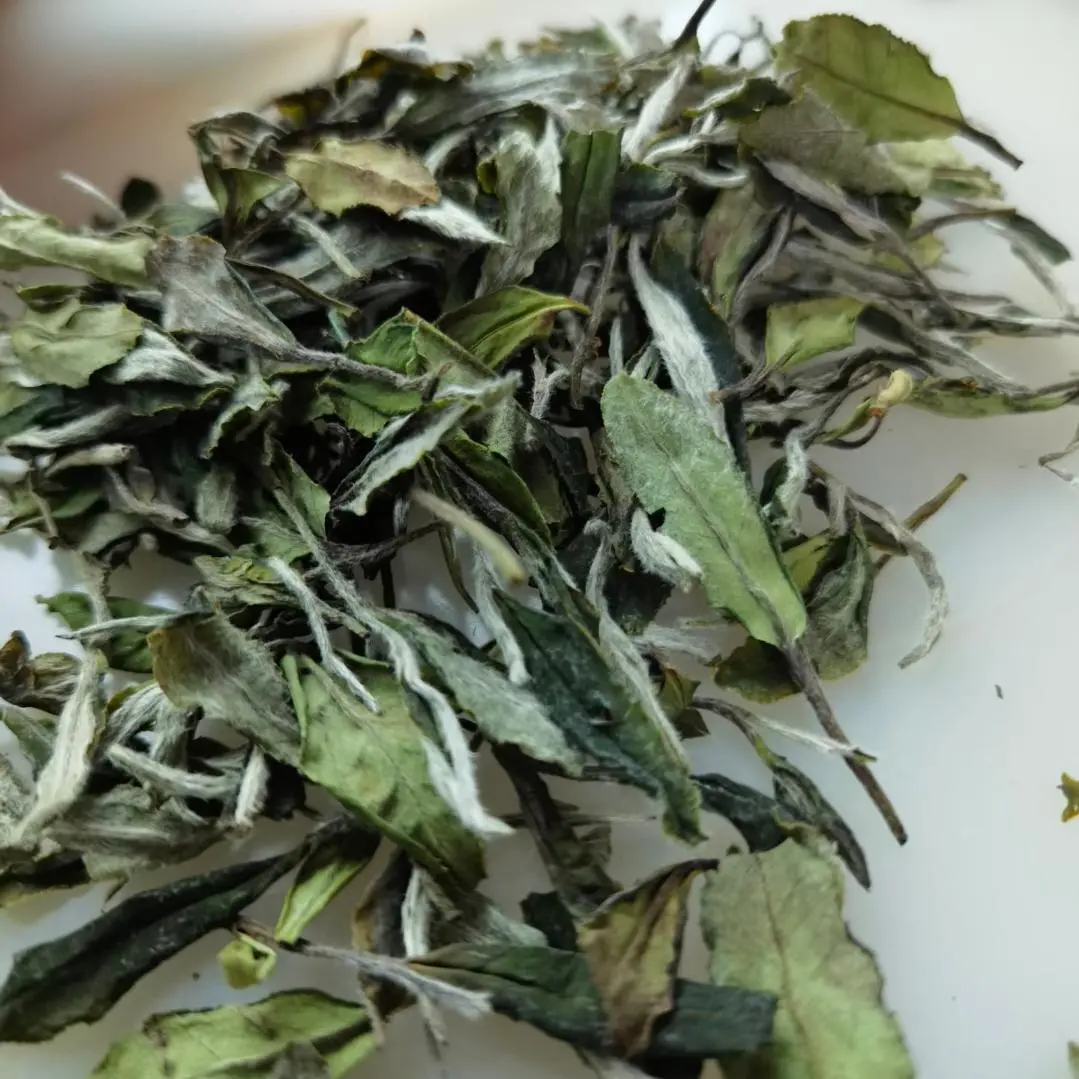
| Liqiu Shou Mei (Start of Autumn) | Expressive aromas with fresh herbal and sweet notes; a pleasantly sweet liquor. |
| Bailu Shou Mei (White Dew) | Richer floral aromas, pronounced sweetness, and a relatively smooth, full-bodied liquor. |
| Qiufen Shou Mei (Autumn Equinox) | More restrained aromas, sometimes with bamboo-leaf or herbal notes; a softer taste. |
| Hanlu Shou Mei (Cold Dew) | Generally more delicate aromas, subtle floral notes, gentle sweetness, and a mellow liquor. |
| Shuangjiang Shou Mei (Frost's Descent) | A relatively rare late-autumn harvest. It may taste sweet and mellow, but there is no single established flavor profile. |
Actual harvests depend on the growing region and weather conditions each year. Shuangjiang Shou Mei, in particular, is not produced in every region or every year.
2. By Age
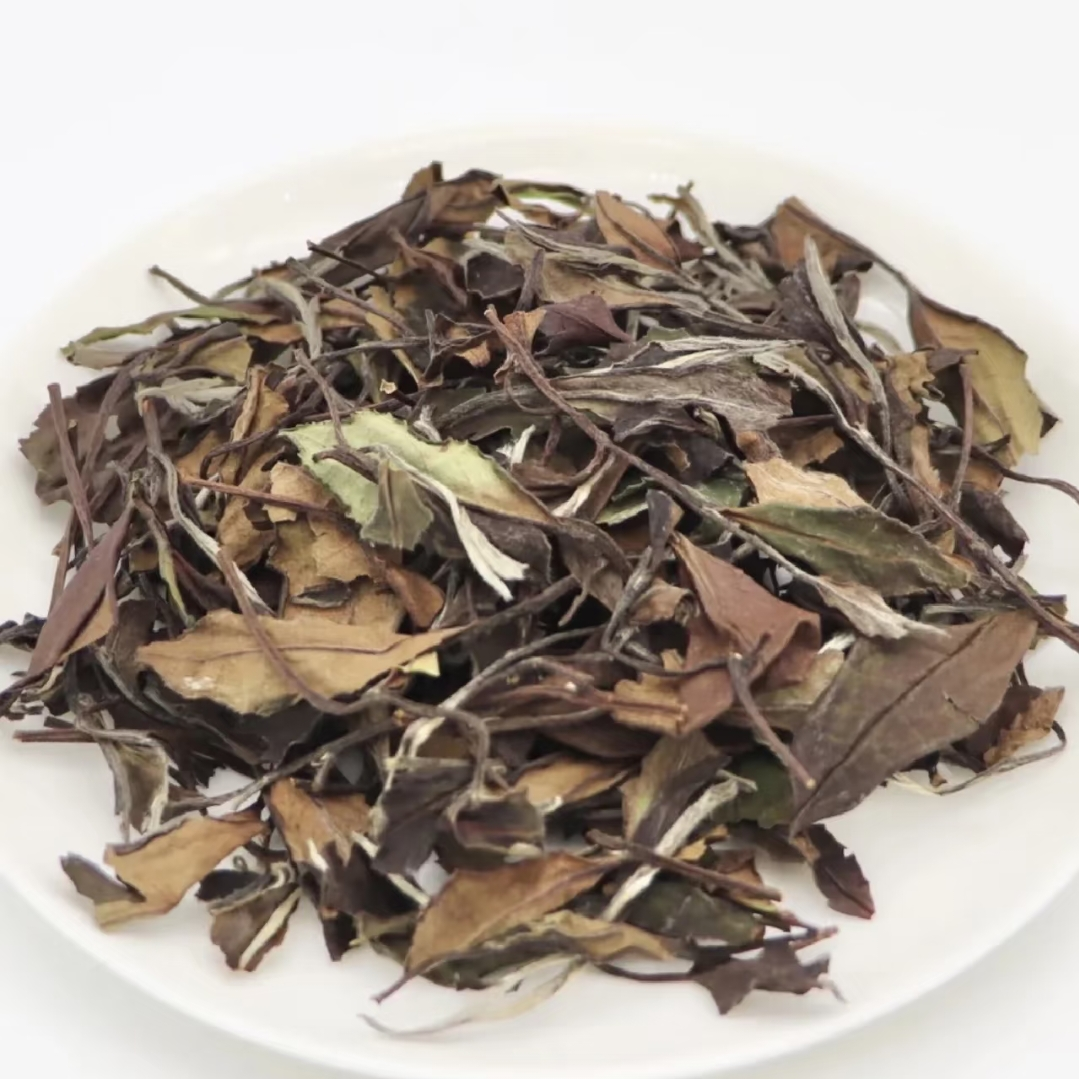
Shou Mei can also be divided into fresh and aged tea. Generally, Shou Mei stored for 1–2 years is considered fresh, while tea aged for 3 years or more is commonly called aged Shou Mei.
| Type | Flavor Profile |
|---|---|
| Fresh Shou Mei (1–2 years) | More prominent fresh herbal and floral aromas; crisp, sweet flavors and a relatively light liquor. |
| Aged Shou Mei (3+ years) | With proper storage, freshness may fade as honey, dried-fruit, and woody notes develop; the liquor may become smoother and fuller-bodied. |
If you are buying Shou Mei for the first time, try fresh tea first, then compare it with a small amount of aged tea. This will help you discover which flavor profile you prefer.
Remember, older Shou Mei is not necessarily better. The quality of the leaves, processing, and storage conditions all have a major impact on the tea. Poor storage can cause it to deteriorate.
3. By Form
The two most common forms of Shou Mei are loose-leaf tea and compressed tea cakes.
| Type | Key Features | Who It's For |
|---|---|---|
| Loose Leaf | Uncompressed leaves retain their natural shape and often offer a clearer, cleaner flavor. Easy to use, but bulky and more prone to breakage in storage. | Everyday drinkers who value convenient brewing. |
| Tea Cake | Loose leaves are softened with steam, pressed, and dried. Compact and easy to transport or store. Some cakes may develop a fuller flavor and red-date notes with age, but require a tool and some skill to break apart. | People with limited storage space, those who age tea, or anyone who likes tea cakes. |
The main difference between loose-leaf tea and tea cakes is their physical form. When made from the same leaves and stored under similar conditions, their underlying flavors are usually similar.
Choose the type of Shou Mei that best suits your preferences and needs.
What Should You Check on the Packaging Before Buying Shou Mei?
One of the easiest ways to avoid problems when buying Shou Mei is to check the product packaging. It can help you make an initial assessment of whether a product is trustworthy.
1. Origin
The traditional core producing areas for Shou Mei are Fuding City and Zhenghe County in Fujian Province. Both have a long history of white tea production.
When shopping, prioritize products that clearly identify where the tea leaves were grown. If a package says only "Fujian White Tea" without specifying the growing region, ask the seller for more details.
This does not mean that Shou Mei from other regions is necessarily inferior. However, the less specific the origin information, the harder it is for buyers to verify where the tea really comes from.
Geographical Indication (GI) status is also worth checking. Both Fuding White Tea and Zhenghe White Tea are protected under China's geographical indication system. If a product displays the official GI logo, you can check whether the producer is authorized to use it and whether the tea meets the relevant origin requirements.
The absence of a GI logo does not automatically mean the tea is fake. But if a seller claims the tea comes from a core production area, supporting documentation can provide greater reassurance.
2. Product Standards
Chinese tea packaging often lists an applicable product standard. This indicates the production and quality requirements the product claims to follow.
As of November 2026, the main Chinese standards relevant to Shou Mei include:
| Tea Form | Standard | Scope |
|---|---|---|
| Loose leaf | GB/T 22291-2017 | National standard for white tea |
| Tea cakes and bricks | GB/T 31751-2015 | National standard for compressed white tea |
| Fuding compressed white tea | T/FDSCX 003-2020 | Related group standard for Fuding white tea |
What deserves closer inspection is any inconsistency between the claimed production date, packaging date, and the standard cited on the label that cannot reasonably be explained. For example, if the label states a 2016 harvest year but cites a 2017 standard, or gives a 2015 production date while citing a compressed-tea standard that took effect only in 2016, the packaging information is inconsistent. This is considered a likely sign of artificially aged or non-compliant tea.
3. Tea Grades
Under China's national standard GB/T 22291-2017, loose-leaf Shou Mei is divided into two grades:
| Grade | Key Characteristics |
|---|---|
| Grade 1 Shou Mei | Relatively tender leaves, a more uniform appearance, and typically more delicate aromas and flavors. |
| Grade 2 Shou Mei | More mature leaves, potentially more stems, and often a somewhat stronger flavor. |
Grades mainly reflect whether the leaf material and sensory quality meet the relevant standards. This does not mean that every Grade 1 Shou Mei tastes better than every Grade 2 Shou Mei.
Shou Mei tea cakes are generally not classified into Grade 1 and Grade 2 in the same way as loose-leaf Shou Mei. Therefore, the absence of a grade on a tea cake is not, by itself, a sign of poor quality.
If loose-leaf Shou Mei is labeled "Premium Grade Shou Mei," take care: "Premium Grade" is not one of the Shou Mei grades specified under the national standard cited above.
4. Production Date
This is an especially common source of confusion when buying aged Shou Mei.
The production date is not the same as the harvest year.
Under China's rules for prepackaged food labels, the production date generally refers to when the food became the final product for sale, rather than when the tea leaves were originally harvested.
For example:
A batch of Shou Mei may have been harvested in 2018, pressed into cakes in 2023, and packaged for sale in 2024.
In that case, the production date on the package may be 2024, even though the leaves were harvested in 2018.
If you are buying aged Shou Mei, try to confirm three separate dates:
The year the tea leaves were harvested.
If it is a tea cake, the year it was pressed.
The production date printed on the package.
These three dates may not be the same. The production date alone cannot tell you exactly how long a Shou Mei has been aging.
If a seller claims to offer Shou Mei aged for more than ten years but cannot clearly explain the harvest year or storage history, buy with caution.
How Can You Judge the Quality of Shou Mei?
Once you receive your Shou Mei, you can assess its quality using four simple steps: look, smell, taste, and notice the aftertaste.
| Step | Good-Quality Signs | Warning Signs |
|---|---|---|
| Look (Appearance) | Natural leaf colors: fresh tea is often gray-green or yellow-green, while aged tea is often yellow-brown; the liquor should be clear and bright. | Too many fragments or impurities, unusually black leaves, or noticeably cloudy liquor. |
| Smell (Aroma) | Clean aromas: fresh tea often has floral and herbal notes, while aged tea may develop red-date or woody notes. | Moldy, sour, stale, or otherwise pungent odors. |
| Taste | Balanced flavors: fresh tea is usually crisp and sweet, while aged tea tends to be fuller and smoother. | Unusual sourness, burnt flavors, or bitterness and astringency that linger. |
| Aftertaste | Natural returning sweetness, saliva production, and a clean, pleasant finish. | Persistent dryness, tightness in the throat, or unpleasant lingering off-flavors. |
One common misunderstanding: stems are normal in Shou Mei. They can contribute to its sweetness, so having plenty of stems does not necessarily mean the tea is low quality.
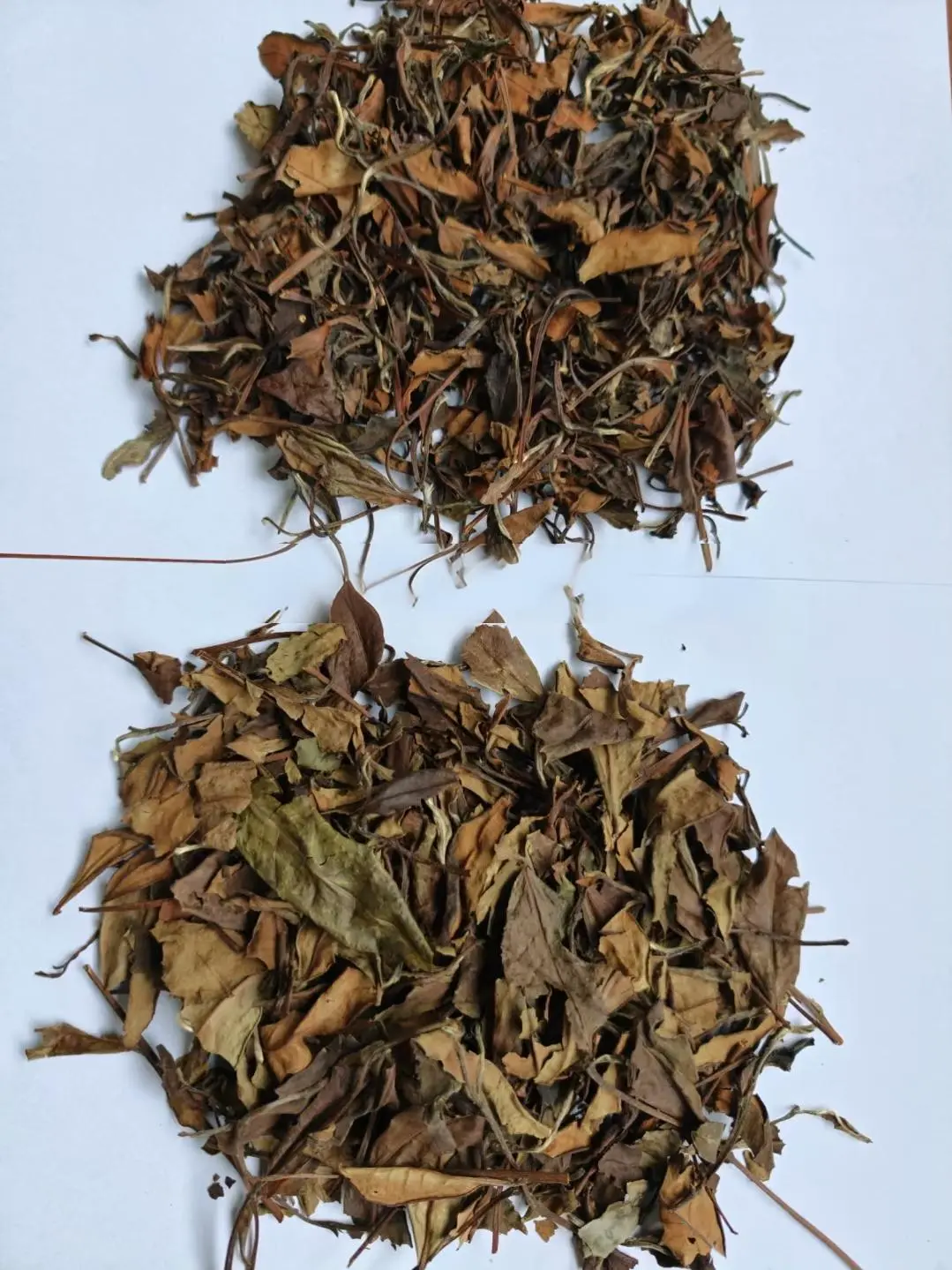
Be cautious of sellers who may use excessive heat or humidity to darken tea quickly and pass it off as naturally aged Shou Mei. One possible clue is dry leaves that are uniformly dark black or reddish brown. Naturally aged leaves can also become very dark or reddish brown, but they often show a wider range of shades and tones.
The image shows artificial aging at the top and natural aging at the bottom.
Final Buying Advice
If you are new to Shou Mei, MistoryTea recommends starting with fresh or autumn-harvested Shou Mei. They generally offer good value and approachable flavors, making them relatively safe choices for beginners.
You can also start with a small package, see whether you enjoy the flavor, and only then buy in larger quantities.