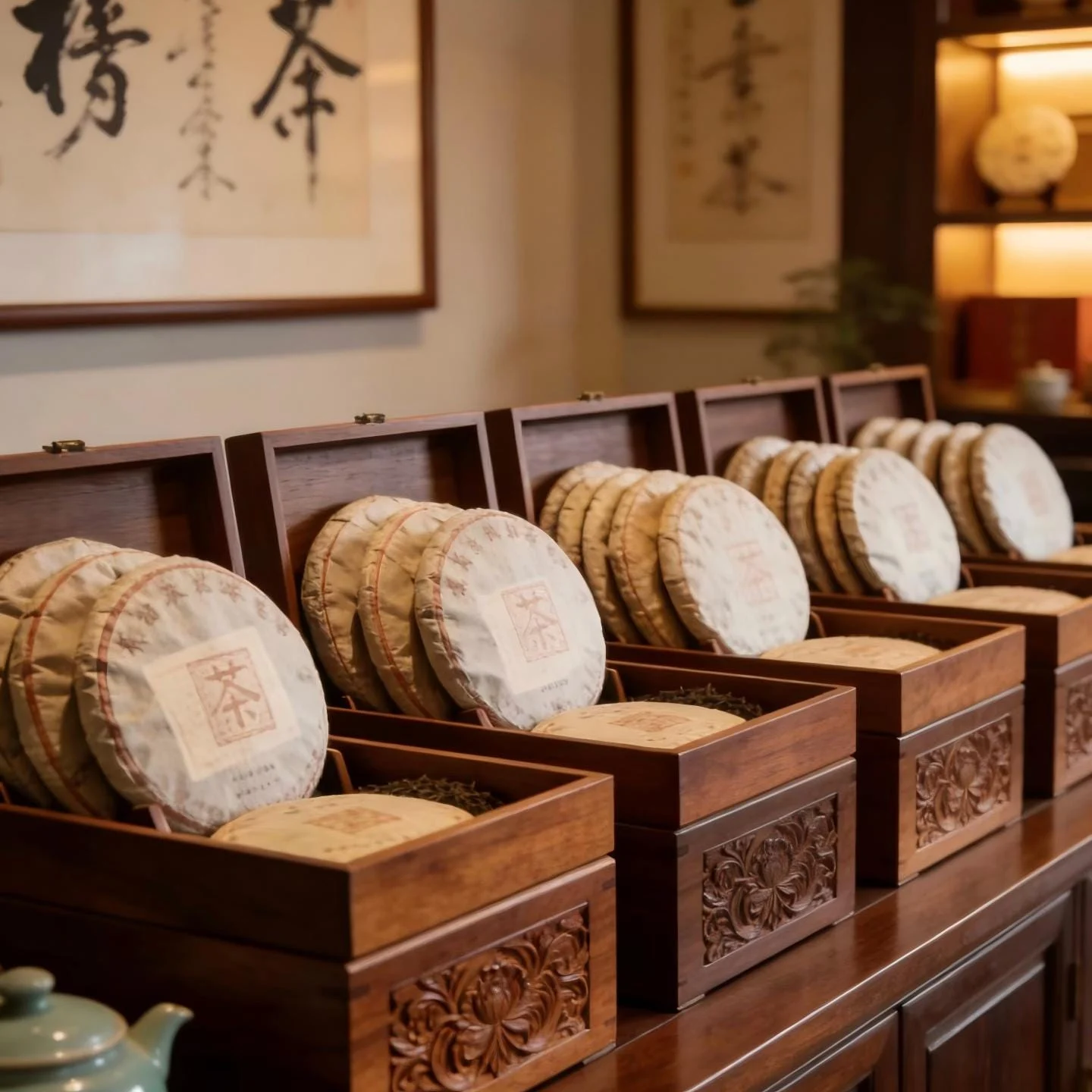
A bottle of wine, a barrel of whiskey, a wheel of cheese—and sometimes, a box of Chinese tea.
Under the right conditions, time can transform them in remarkable ways.
But the truth is, not every tea gets better with age.
Which Teas Can Be Aged?
Dark Tea and White Tea
Dark tea and white tea can gradually become smoother, richer, and more mellow when stored properly. Over time, they may develop deeper aromas such as honey, dried fruit, wood, herbs, or other aged notes.
Green Tea, Black Tea, Yellow Tea, and Oolong Tea
Green tea, black tea, yellow tea, and oolong tea are different. As time passes, they generally lose freshness. Their bright flavors, lively aromas, and fresh character slowly fade. If your tea is best enjoyed fresh, follow our guide to keeping Chinese tea fresh instead of trying to age it.
So before you decide to age a tea, the first thing you need to know is whether the tea you have can actually improve with time.
You can determine which of the six major tea categories your tea belongs to by its taste, color, and aroma.
If you're unsure which category your tea belongs to, use our guide to identifying Chinese tea types.
Once you know your tea has the potential to age, the next question is whether it is actually worth aging.
After all, tea aging is measured in years.
Is My Tea Worth Aging?
I suggest choosing a tea that is affordable for you and already impresses you from the very first sip.
There are two ways to think about this: investment and flavor.
Investment
From an investment perspective, older teas with good flavor can become more expensive. In China, some people even treat aged tea as an investment.
Personally, I think that makes tea drinking too goal-oriented and takes away much of the fun.
Choose tea you can comfortably afford. Do not buy it expecting to make money.
Flavor
The second perspective is flavor.
If a tea already tastes wonderful the first time you drink it, there is a good chance it will also be enjoyable to age.
The interesting part is that its flavor will keep changing along the way. If you already like the tea at the beginning, there is a good chance you will enjoy many of its stages as it develops.
You can taste it every few years and experience how it changes.
For me, that is one of the most enjoyable parts of collecting tea.
There are also teas that may not seem especially impressive when young but become much better with time—and sometimes increase significantly in value.
However, choosing these teas requires a deep understanding of tea, including growing regions, geography, climate, soil, processing, and many other factors.
I would not recommend this approach to beginners.
But if you happen to come across one of these teas, it can become a wonderful surprise, whether you drink it yourself or view it as something valuable.
Once you decide that a tea is worth keeping, the next question naturally becomes:
How should you store it so that it can continue to develop properly?
Before answering a “how-to” question, I like to start with the principle behind it.
Understanding why something works is much more useful than simply memorizing what to do.
Why Do Dark Tea and White Tea Improve With Age?
The answer mainly comes down to how the six major types of Chinese tea are processed.
Under suitable conditions, dark tea and white tea can continue changing even after production is complete.
Dark Tea: Microbial Post-Fermentation
Dark tea goes through post-fermentation during production, with microorganisms playing an important role.
Even after the tea has been made, microorganisms and compounds inside the leaves can continue to change under suitable storage conditions.
Microorganisms produce enzymes that break down coarse cellulose and large polysaccharides into smaller sugars, helping the tea taste sweeter and smoother.
These enzymes can also transform some of the more astringent tea polyphenols, reducing harshness.
At the same time, microbial activity can create distinctive aromas such as woody, aged, earthy, fungal, or betel-nut-like notes.
White Tea: Slow Oxidation Driven by Natural Enzymes
White tea is mainly processed through withering and drying.
Because the processing is relatively simple, many polyphenols, amino acids, aroma precursors, and most importantly, naturally occurring oxidative enzymes remain in the leaves.
These enzymes are not completely deactivated.
During storage, under dry and suitable conditions, they continue to react very slowly.
Over time, some of the small catechins responsible for bitterness and astringency oxidize and polymerize into compounds such as theaflavins, thearubigins, and darker oxidation products.
As a result, bitterness and astringency gradually decrease, and the tea becomes softer and less aggressive.
Meanwhile, the fresh downy, grassy, and green aromas of young white tea slowly fade.
New aromas may develop through gradual chemical changes, including notes often described as dried dates, dried leaves, herbs, or medicinal herbs.
Now that we understand why these teas can change with time, the next question is:
What factors affect their storage and aging?
What Affects the Storage and Aging of White Tea and Dark Tea?
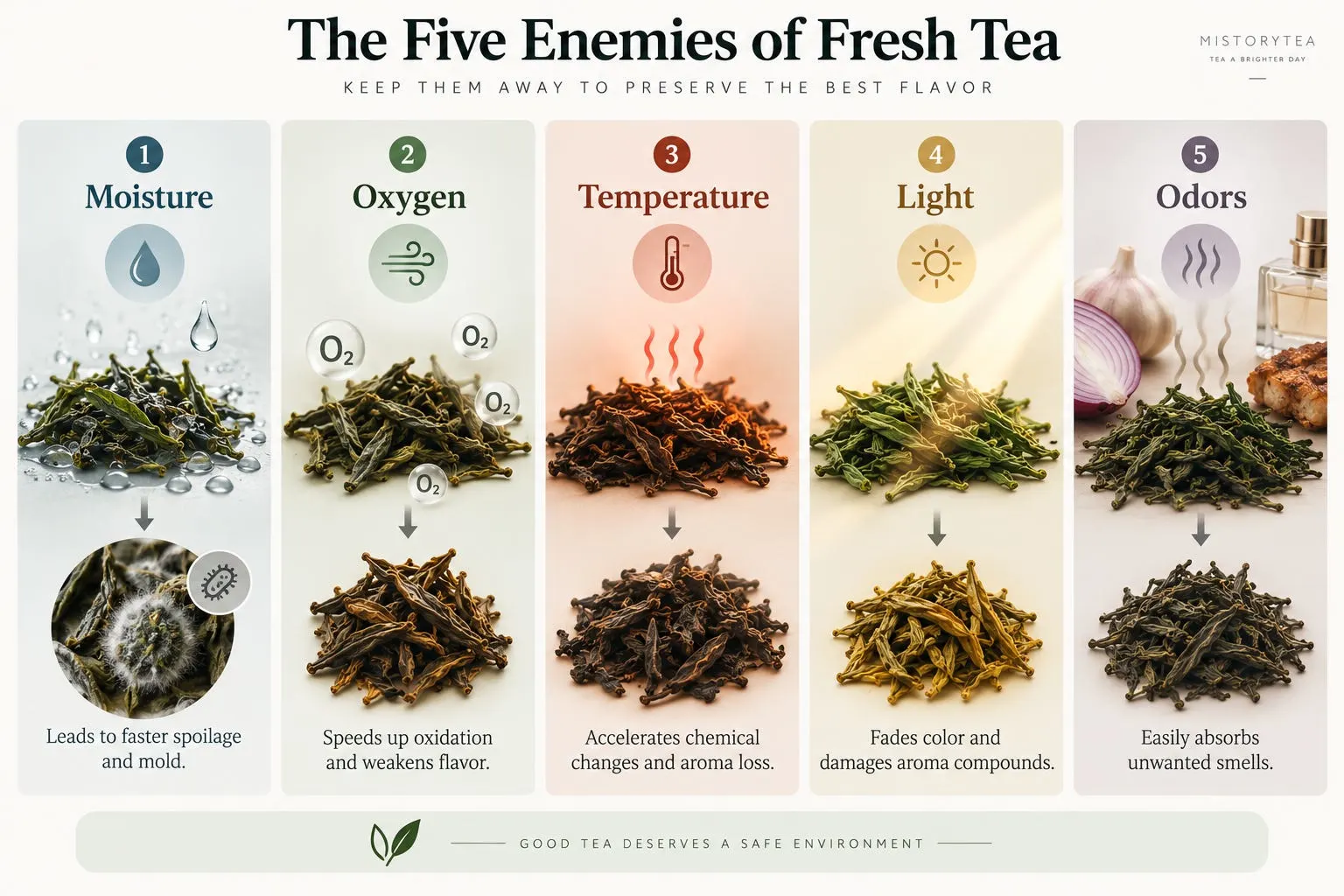
The main storage factors are actually the same for all the tea:
Temperature, Humidity, Oxygen, Light, and Odors.
The difference is that the goal of storing dark tea and white tea is not only to prevent deterioration.
You also want them to continue developing properly.
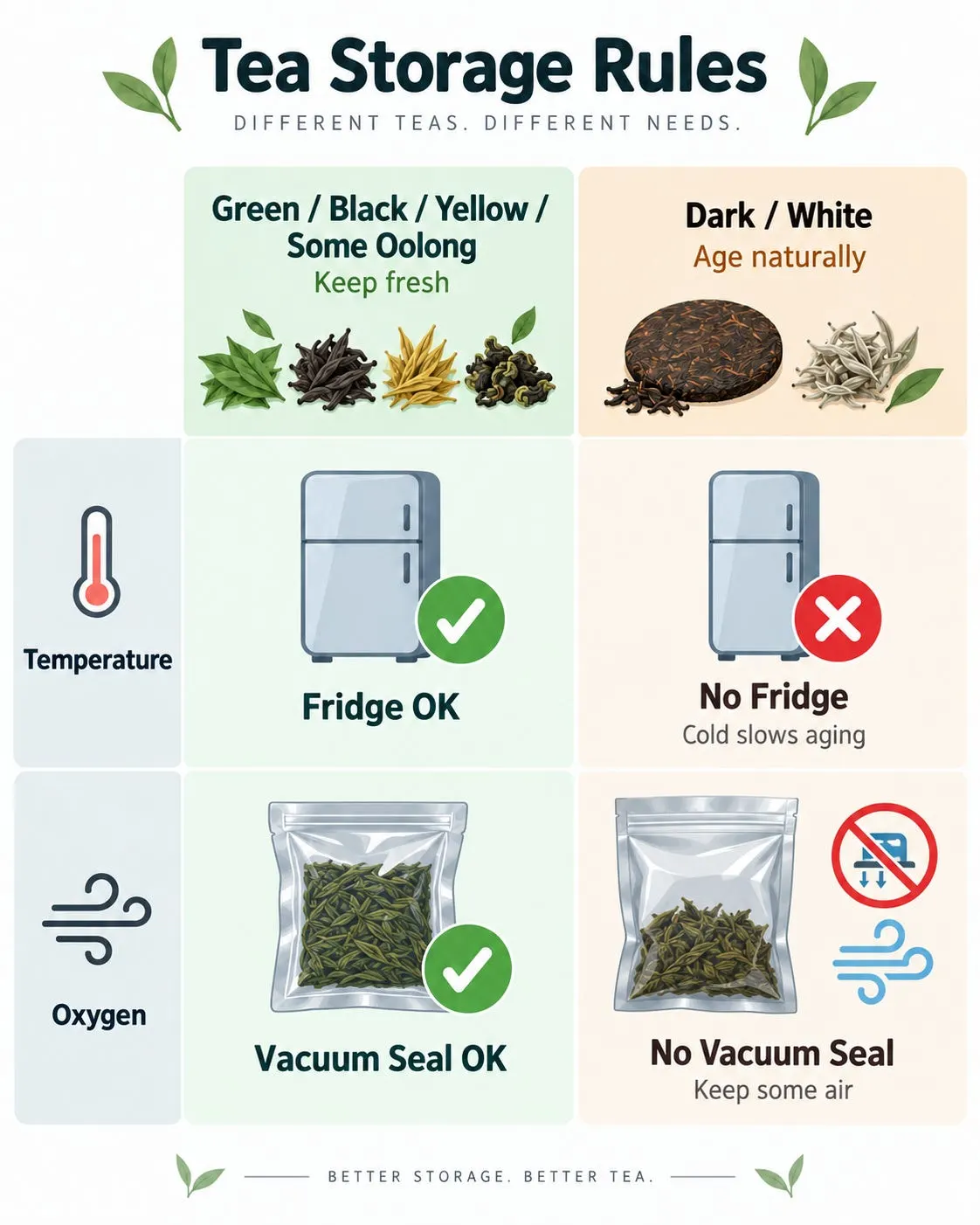
This creates two important differences:
Temperature
First, green tea, black tea, yellow tea, and some oolong teas can be stored in the refrigerator.
Dark tea and white tea generally should not. Refrigerator temperatures are too low and can greatly slow down the aging process.
Oxygen
Second, green tea, black tea, yellow tea, and some oolong teas can be vacuum-sealed.
Dark tea and white tea should not be completely vacuum-sealed if the goal is long-term aging, because their gradual transformation requires some interaction with oxygen.
So how should you actually store white tea and dark tea?
How to Store White Tea and Dark Tea
Once you understand the principle, the method is actually quite simple.
Give your tea a place that is:
Dry, Cool, Dark, Free From Strong Odors, and Reasonably Well Ventilated.
Avoid refrigeration and complete vacuum sealing.
However, white tea is generally more delicate in flavor and more sensitive to moisture than dark tea.
Because of this, the two are usually stored a little differently.
How to Store White Tea
The main priorities for white tea are controlling moisture and limiting excessive exposure to air.
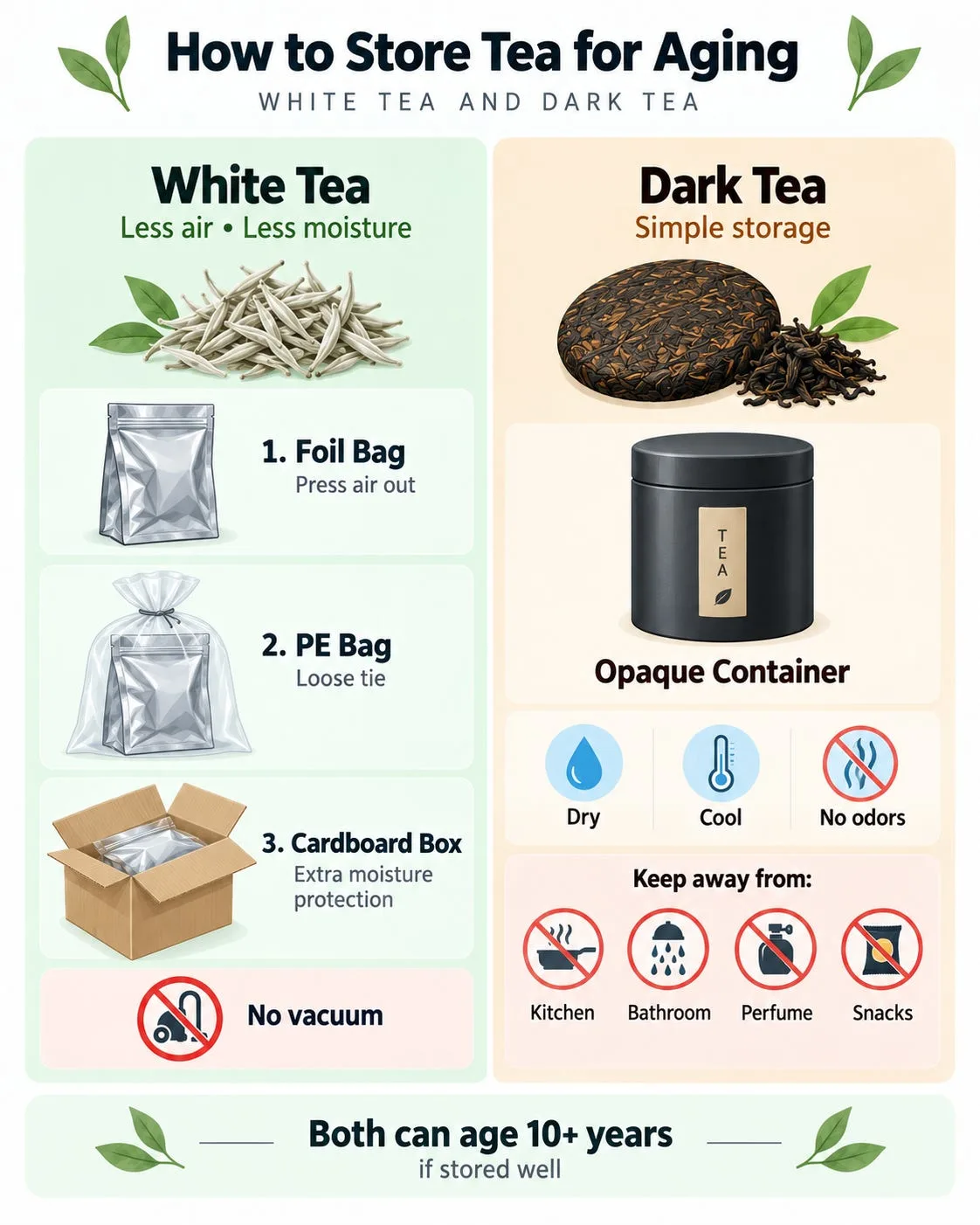
A commonly used method is the three-layer storage method.
The first layer is a food-grade aluminum foil bag. Gently press out most of the excess air, but do not vacuum-seal it.
The second layer is a food-grade PE plastic bag. Place the first bag inside loosely and tie the opening gently rather than sealing it extremely tightly.
The third layer is a five-layer corrugated cardboard box.
Place the tea inside and close the box. You do not need to completely seal every gap with tape.
The first layer helps limit the rate of air exchange, while the second and third layers provide additional protection against moisture.
How to Store Dark Tea
Dark tea is generally easier to store.
You can place it in an opaque container and keep it somewhere dry, cool, and free from strong odors.
Keep it away from kitchen fumes, bathrooms, perfume, snacks, spices, and anything else with a strong smell.
Under suitable conditions, both dark tea and white tea can often be stored for more than Ten years.
How Can You Tell Whether Your Tea Has Aged Well or Gone Bad?
You can check your tea in four simple ways
Look, Touch, Smell, and Taste.
Here are some warning signs.
Look at the Dry Leaves and the Liquor
For white tea, watch for white, green, or black fuzzy mold on the leaves, as well as unusually dark, damp-looking clumps.
For dark tea, watch for fuzzy white, green, or black mold on the surface.
Also remember that a very dark or reddish tea liquor does not automatically mean the tea has aged well.
Color alone is not enough.
Touch the Dry Leaves
For both white tea and dark tea, be cautious if the leaves feel soft or damp.
Compressed cakes or bricks may also become unusually soft.
Sticky areas or clumping can also suggest moisture damage
Smell the Dry Tea and the Lid After Rinsing
Warning signs include moldy smells, sour or spoiled aromas, rotten odors, or a stuffy, damp-storage smell.
Taste the Tea and Pay Attention to How Your Throat Feels
If the tea tastes unpleasantly sour, aggressively bitter, or causes an unusual tight, dry, itchy, or uncomfortable feeling in your throat, stop drinking it.
When Can I Start Drinking It?
From the very first day you buy it, you can start to drink it.
Collecting tea does not mean you have to wait for some imaginary “perfect year” before opening it.
In fact, I recommend brewing it when you first buy it.
Remember what it tastes like now.
Drink some and save some.
Then come back to it a few years later and see what it has become.
I like to call this “the Taste of Time.”
I prefer to think of tea aging as a long-term tasting experiment rather than a race toward the final cup of “old tea.”
This is also why I do not like treating tea purely as an investment.
If I saw tea only as an investment, I might be reluctant to drink it along the way.
I would miss the chance to experience the taste of time.
And imagine waiting ten years only to discover that the tea had been stored badly and developed mold—or that its market price never increased as expected.
I would be very disappointed.
I think life can be approached in much the same way.
If you focus only on the final result, you may spend the entire journey feeling anxious.
But if you pay attention to the process, you can actually enjoy it.
And sometimes, when you stop calculating every gain and loss, you may eventually end up with a cup of tea that surprises you.
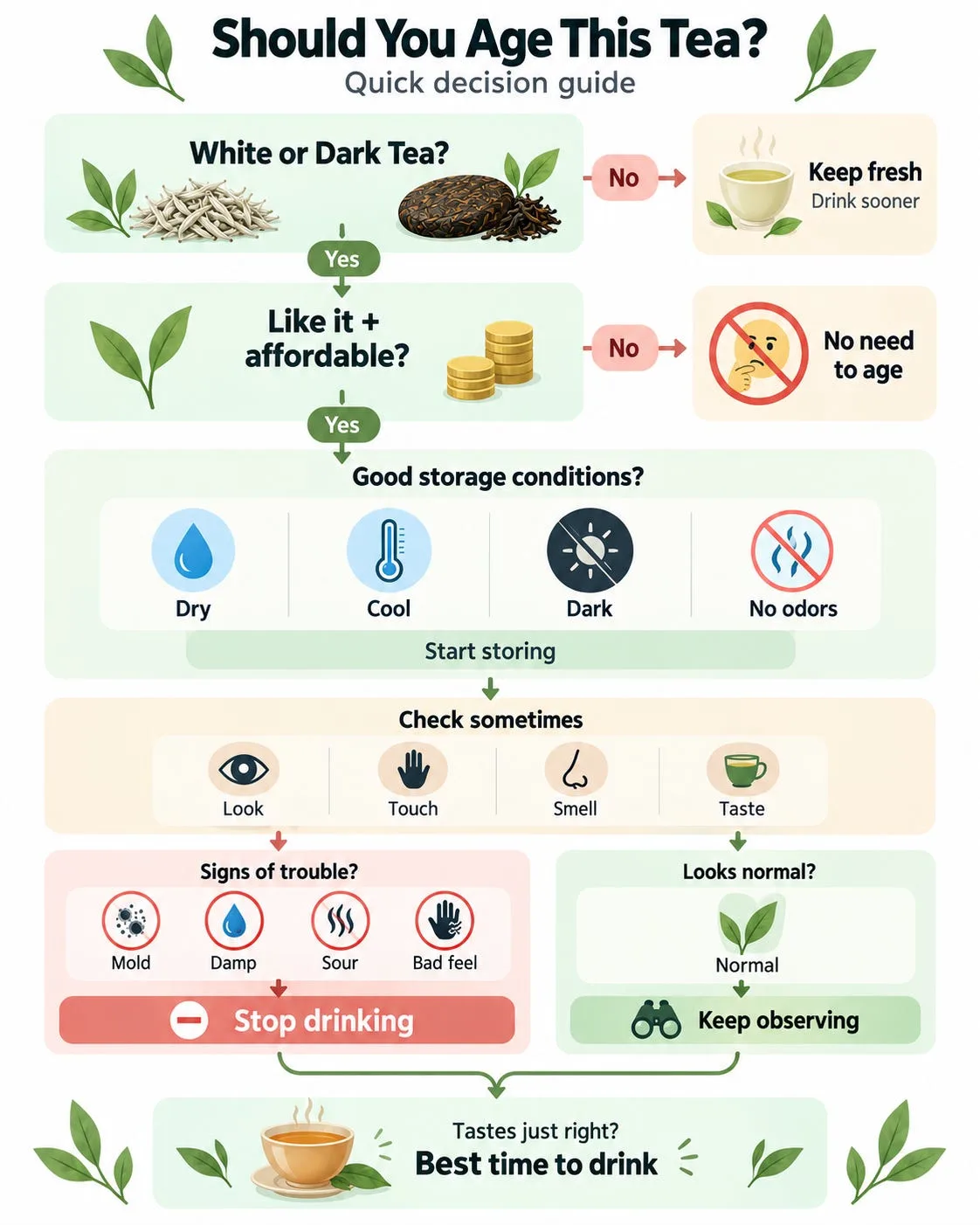
Summary
First, determine whether the tea you have is white tea or dark tea.
If it is not, your priority should usually be preserving freshness and drinking it while its best qualities are still present.
If it is white tea or dark tea, ask yourself whether you already enjoy its flavor and whether the price is comfortably within your budget.
If the answer is no, there is little reason to collect it simply for the sake of “aging.”
If you decide to keep it, make sure your storage environment is dry, cool, dark, and free from strong odors.
Once the environment is suitable, you can begin long-term storage.
You do not need to wait for a specific year before opening it.
Check it from time to time by looking, touching, smelling, and tasting.
If you notice mold, moisture, sour or spoiled smells, or obvious discomfort when drinking it, do not continue consuming it.
If everything seems normal, keep observing how it changes.
And one day, when you taste it and realize that it has reached a flavor you truly love, that is the best time to drink it.